
Cold shower or ice bath: which is better for recovery
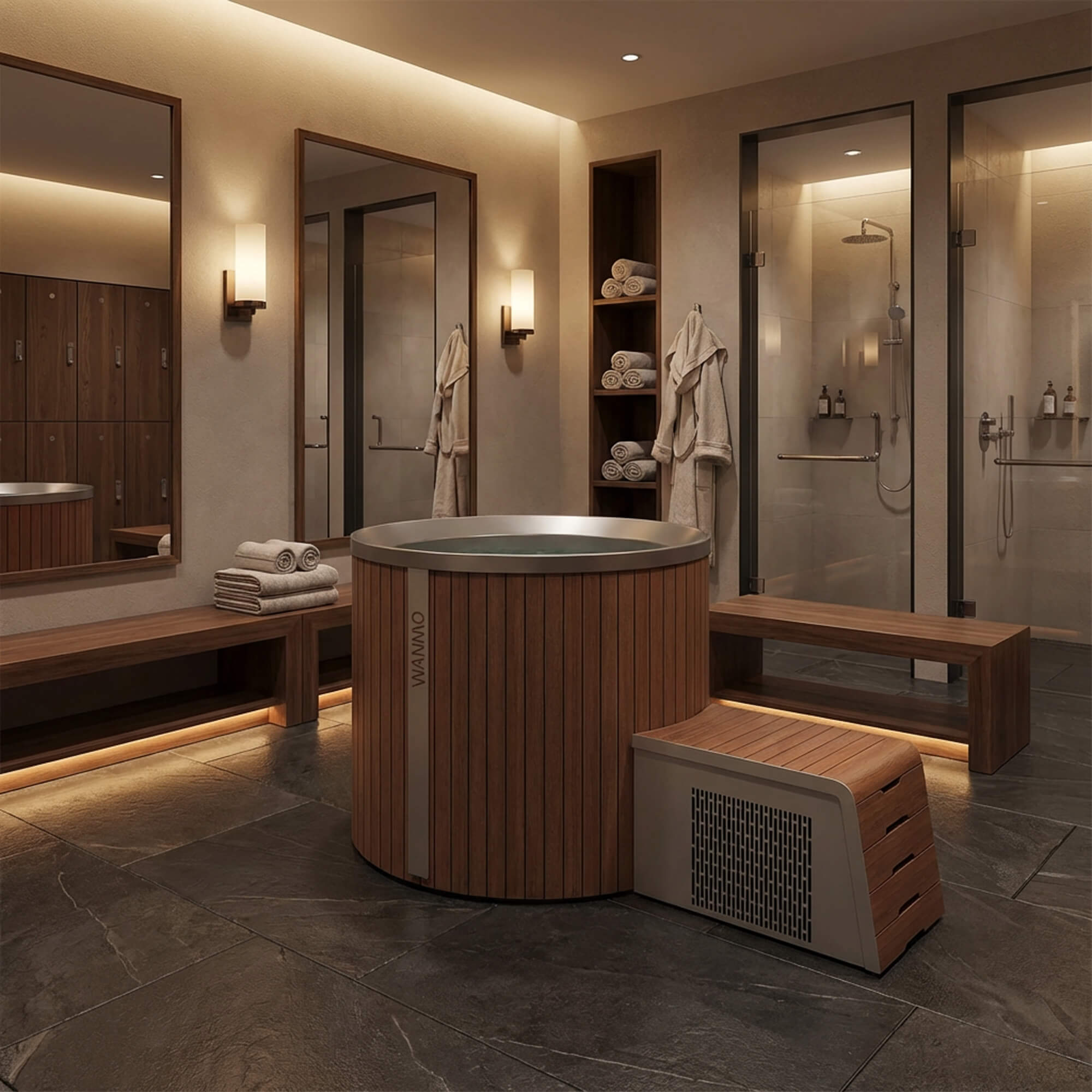
Cold shower or ice bath: what’s the difference and which should you choose?
A cold shower is the most accessible way to get started with cold exposure. It requires no special equipment and takes just a few minutes.So why are more and more people switching to ice baths? Is the only difference the water temperature?
Not really. The main difference is how the cold acts on the body. That’s why the sensations and effects of these two practices can differ significantly.
Let’s look at how a cold shower and an ice bath differ, who each option suits, and whether it’s worth moving on to full immersion.
The main difference isn’t the temperature
Many people think it’s all about the number of degrees.In practice, that’s not quite true.
Cold tap water is usually in the 15–20°C range (depending on the season and region).
An ice bath lets you precisely maintain a temperature of 2 to 15°C.
But something else matters much more.
In the shower, water constantly runs off the body. One area cools, then another. The body has time to partially adapt.
In an ice bath, the whole body is surrounded by cold water at once. The effect is more even, intense and predictable.
That’s why even a bath at 12–15°C can feel much stronger than a cold shower.
How the body responds to cold
Both a shower and an ice bath trigger the body’s natural response to cold.In the first seconds, breathing quickens, the nervous system activates, and the body starts producing hormones that help it cope with stress.
With full immersion, however, this response is stronger.
That’s why after an ice bath many people notice:
- a more pronounced surge of energy;
- a feeling of mental clarity;
- a lasting sense of alertness;
- deeper relaxation after getting out of the water.
Which to choose for post-workout recovery
If your main goal is to recover quickly after intense physical exercise, an ice bath is considered the more effective tool.During full immersion, nearly the entire body is cooled at once.
This helps:
- reduce muscle soreness;
- recover faster after cardio;
- reduce overall fatigue.
Keep in mind, though, that after strength training aimed at muscle growth, it’s better to use cold therapy 4–12 hours later rather than immediately after the workout.
Which helps you handle stress better
Here, too, the ice bath has the edge.
Full immersion is a controlled stress that requires focus and calm breathing.
The body gradually gets used to it, and along with that, your attitude toward stressful situations in everyday life changes too.
Many practitioners say they start making decisions more calmly, cope with emotional strain more easily, and get back to work mode faster after a tense day.
Can a cold shower replace an ice bath?
This is one of the most common questions.If we’re talking about an energizing boost in the morning, a cold shower really does the job well.
But if your goal is to practice cold therapy regularly, recover faster after sports or systematically build stress resilience, an ice bath delivers a more pronounced and predictable result.
It all comes down to full body contact with the water and the ability to control the temperature precisely.
What to choose as a beginner
You don’t have to start straight away with an ice bath — there are several options.If you’ve never practiced cold exposure
Start with a cold shower.It will help you get used to the sensations and lower the psychological barrier.
If you want the full effect
You can start right away with an ice bath, but at a comfortable temperature.For your first sessions, this is enough:
- 12–15°C
- 1–2 minutes
- calm breathing
- gradually increasing the time
Extremely low temperatures offer no extra benefit for beginners.
Consistency matters far more.
Which is more convenient in everyday life
A cold shower is always available.But its temperature depends on the time of year, water pressure and your water supply.
An ice bath with automatic cooling lets you:
- maintain a precise temperature;
- use the same routine every day;
- skip buying ice;
- practice whenever it suits you, with no preparation.
For those who make cold therapy part of their daily ritual, this becomes the main advantage.
What if there’s no room at home?
Just a few years ago, this really was a problem.Most systems took up a lot of space and were designed mainly for country houses or sports centers.
Today there are compact models that fit even in an ordinary apartment.
If you’re still choosing equipment, we recommend reading our article “How to Choose an Ice Bath for Your Home,” where we cover sizes, cooling systems and other important specs in detail.
FAQ
Can a cold shower fully replace an ice bath?
If your goal is to wake yourself up in the morning, a cold shower works great.For recovery after exercise and regular cold therapy, full immersion usually has a more pronounced effect.
Where should a beginner start?
Most people start with a cold shower.But if you want to try an ice bath, it’s best to use a comfortable temperature of 12–15°C and short sessions of 1–2 minutes.
Is it true that a long cold shower works the same way?
No.Even a long shower doesn’t provide full body contact with cold water and can’t keep the temperature steady where you need it.
Which is cheaper to use?
At first glance, a cold shower costs nothing.An ice bath without a chiller requires regularly buying or freezing ice.
Systems with automatic cooling maintain the temperature on their own and eliminate that need.
Can I combine cold showers and ice baths?
Yes — many people take a cold shower daily and use an ice bath a few times a week when they want a deeper recovery effect.The bottom line
Cold showers and ice baths aren’t competitors — they’re different tools.A shower is great for getting acquainted with cold, building the habit and getting a quick energy boost.
An ice bath is the next step for those who want to make cold therapy a regular practice, get a more pronounced recovery effect and learn to handle stress better.
The key is not to chase extreme temperatures. A gradual approach and consistency always work better than one-off records.
Try cold therapy for yourself
If you want to find out whether this format is right for you, you don’t have to buy equipment right away.At the WANMO showroom you can book a trial session, get to know the equipment, get recommendations on starting the practice safely and choose the solution that suits you best.
Or browse the WANMO ice bath catalog to see models for homes, sports and commercial spaces.